Link in Bio for Ecommerce: The 2026 Setup Guide
 Marcel Cruz
Shopify discontinued Linkpop. Linktree takes 9-12% of every sale. Most "best link in bio for ecommerce" lists are tool-marketing pages with zero actual setup advice. This guide is the opposite: what to put on a bio page when you sell physical or digital products, how to wire checkout without losing margin to platform fees, and how to track conversions back to the right ad set.
The short version: you want product cards (not just text links), checkout that runs on your existing Stripe or Shopify account, and pixel tracking on the bio page itself. Three things most generic bio link tools do badly or charge extra for.
Why an online store needs a real bio page (not just a homepage URL)
One link in your Instagram bio pointing at your homepage is a leaky funnel. A visitor who came in for a TikTok-viral product has to land on your homepage, find the menu, find the right collection, find the product, then check out. Every extra tap costs you sales.
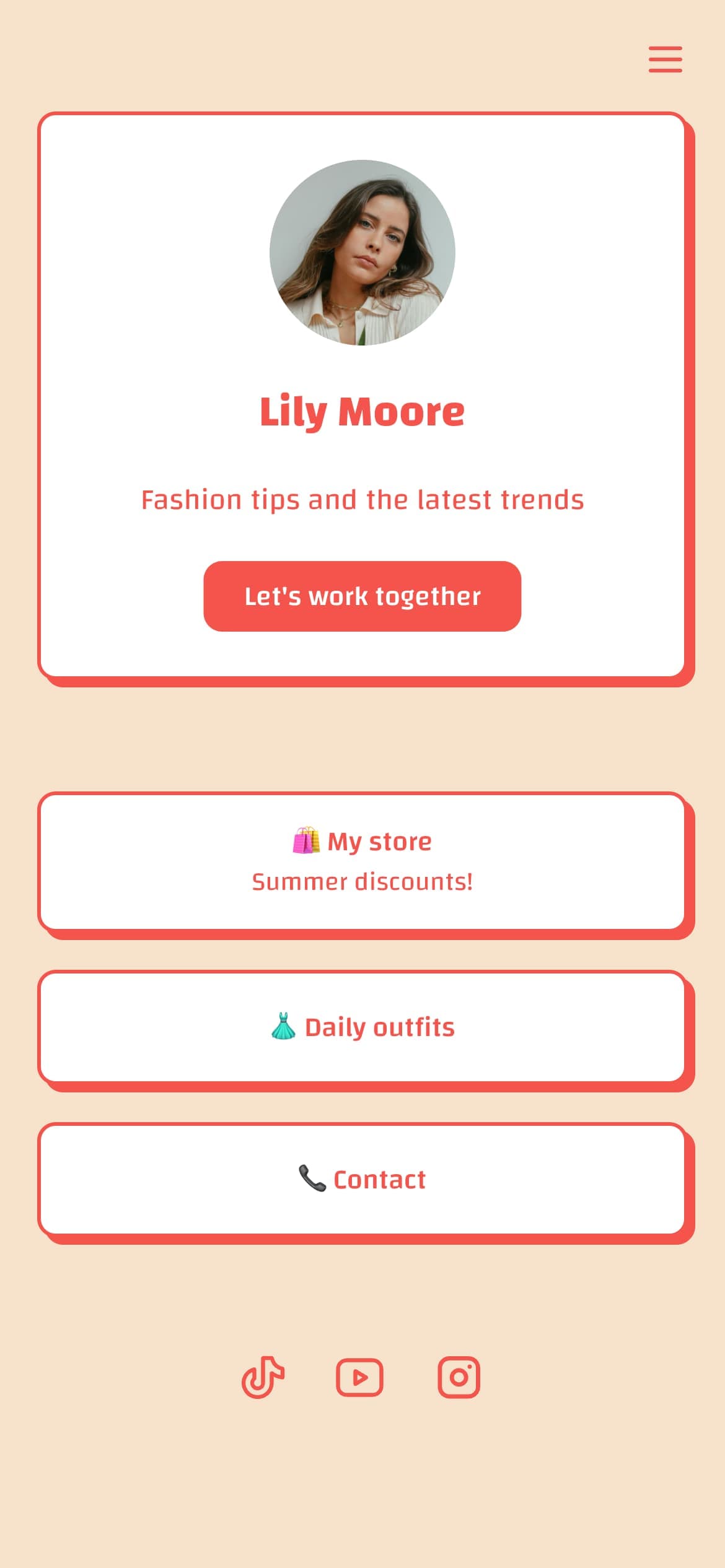
A bio page collapses that into one screen. A first-time TikTok viewer sees the exact product they came for, pinned at the top with an image and a Buy button. A returning Instagram follower sees this week's drop. A newsletter visitor sees the discount-code lead magnet. Same URL, different priorities surfaced.
Three reasons this matters more for ecommerce than for any other use case:
- Different products for different audiences. Your TikTok demographic isn't your Instagram demographic isn't your email list. A bio page lets you route each one to the product they're most likely to buy.
- Promotions and drops change fast. A homepage banner buried under nav bars and hero images doesn't compete with a top-of-page countdown block.
- Social-to-checkout friction kills conversion. A March 2026 r/socialmedia thread about "leaky funnel" routing argued that anything past three clicks from social to checkout drops conversion sharply. A bio page keeps that path short.
What happened to Shopify Linkpop
Shopify shut down Linkpop in 2026. The company hasn't replaced it with another standalone link-in-bio product. Some of Linkpop's best ideas were folded into the main Shopify storefront builder (sections, custom homepages), but Shopify-store owners no longer get a dedicated bio link tool from Shopify itself.
The practical effect: Shopify merchants who were on Linkpop need to migrate, and new Shopify merchants choose a third-party tool by default. The "best link in bio for Shopify" SERP is now wide open. Most of the results are still old listicles that include Linkpop as a recommendation.
If you migrated off Linkpop, the playbook below applies the same way it would to any other Shopify-friendly bio link tool.
Linktree's transaction-fee math
Linktree's free plan takes 12% on every sale routed through their Commerce features. Starter and Pro drop that to 9%; only Premium at $35/month takes it to zero. That's on top of Stripe's 2.9% + $0.30, on top of Shopify's own checkout cut if you're using Shopify Payments.
Run the math on a $5,000/month store: Linktree's commerce fees alone come out to $450 to $600 per month. Annualized, that's $5,400 to $7,200 for a tool most people picked because it was "free." Shopify's own checkout via your normal payment processor takes the standard 2.9% + $0.30 and nothing more. (For a deeper breakdown, see our Linktree pricing analysis.)
The fix is straightforward: pick a bio link tool that doesn't take a cut of your sales. Run checkout on your existing Stripe or Shopify account. The bio link tool should be routing traffic, not skimming revenue.
What to look for in a link in bio for ecommerce
Before going deep on tools, decide whether you actually need a storefront on the bio page or just an aggregator. The answer depends on your monthly bio-link revenue, not on which pitch you read last.
Six things to check before you commit to a tool:
- Product card blocks with image, label, and a Buy button, not just plain text links.
- Embeddable checkout so you can drop in a Shopify Buy Button, Stripe Payment Link, Gumroad widget, or Etsy listing without adding a fee tier.
- Pixel and UTM tracking so you can fire Meta Pixel, TikTok Pixel, and GA4 events on the bio page itself, not just on the destination store.
- Custom domain so the URL on your packaging, ads, and stickers matches your brand instead of
linktr.ee/yourstore. - No transaction fee on the bio link. Pick a tool that charges a flat subscription, not a percentage of your sales.
- Multi-CTA layout that handles 5-10 active products plus a newsletter signup without looking cluttered.
If a tool fails on points 2 or 5, walk away. Those are the ones that quietly cost you the most over a year.
Create Your Link-in-Bio Page
All your content in one customizable page. 18 content blocks, custom domains, and built-in analytics.
Create your pageBio page blocks that convert for ecommerce
Build the page top-down by intent, not by link order. The first thing a TikTok visitor sees should match what made them tap.
Featured product or this week's drop. A photo block plus a Buy button plus a one-line label. Update it whenever you launch something new. This is the highest-converting slot on the page.
Best-sellers carousel. Three to five product cards stacked or in a horizontal carousel. Image, name, optional price, Buy button. Pick the products with the highest conversion rate, not the highest margin. Get the first sale, then upsell on the destination store.
Limited-time offer banner. A bold, full-width block for sales, BFCM, or seasonal drops. Add an end date so it feels real.
Shop by collection. Two to four buttons routing to your top collections (New, Sale, By Audience). Useful when you have a wide catalog and don't want to overwhelm the page with individual products.
Newsletter signup with a discount-code lead magnet. Form block, single email field, "Get 10% off your first order" copy. The discount code goes out via your email tool's welcome automation. This is how you turn one-time TikTok visitors into a marketing list you actually own.
Customer reviews or social proof. A testimonial block, screenshots of UGC, or a "featured in" press strip. Useful for newer brands where trust is the conversion blocker.
Click-to-call or DM-for-custom-orders. For Etsy-style or made-to-order shops where some sales happen over chat.
Skip blocks that don't move sales. Founders' notes, "about us" links, and full social-platform link lists belong on your store, not on the bio page.
Conversion tracking for bio-page sales
The mistake most stores make: they install Meta Pixel and TikTok Pixel on the storefront only. The bio page sits in the middle of the funnel with no events firing. You see ad-to-sale data but not ad-to-bio-click data, which means you can't optimize the top of the funnel.
Fix that with three steps:
- Install pixels on the bio page itself. Meta Pixel and TikTok Pixel both ship as a single tracking snippet. Most modern bio link tools support adding them in settings. Linkero supports Facebook Pixel, TikTok Pixel, and Google Analytics on every plan, with no extra tier required.
- Tag every outbound link with UTMs.
utm_source=instagram-bio,utm_medium=bio-link,utm_campaign=spring-2026. This survives even when iOS 14+ ATT blocks pixel attribution. Your GA4 acquisition reports will thank you. - Track the full funnel. PageView on bio page, then ViewContent on product, then AddToCart, then Purchase. With both bio-page and store-side pixels, you can finally see where people drop and which traffic sources actually buy versus just click.
If you want the longer breakdown of pixel and UTM setup specifically, our pixel tracking for sales walkthrough covers Meta, TikTok, and GA4 step by step, and the analytics guide covers the full event map.
Where Linkero fits for ecommerce
Linkero isn't a commerce platform. It doesn't process payments, run a checkout, or charge a percentage on sales. It's a bio page builder, and that's exactly what you want sitting between your social traffic and your real store.
What's relevant for an ecommerce setup:
- Product cards built from photo + button + carousel blocks, styled per block to match your brand.
- Embed block for dropping in a Shopify Buy Button, Stripe Payment Link, Gumroad widget, or any other external checkout. No fee tier, no cut.
- Form block for the newsletter discount-code lead magnet, with replies routed to in-app, email, or webhook.
- Facebook Pixel, TikTok Pixel, and Google Analytics on every plan, plus built-in analytics so you can see what's clicked without leaving the dashboard.
- Custom domain so your bio page lives at
shop.yourbrand.cominstead of a generic builder URL. - Per-block styling so the page looks like your store, not a default template.
- No transaction fees on the bio link. Linkero is a flat subscription. Your Stripe and Shopify fees stay exactly where they were before.
See /pricing for current plans.
FAQ
What is the best link in bio for Shopify?
Any bio link tool that supports embedding the Shopify Buy Button (or links out cleanly to your Shopify store) and doesn't add a transaction fee on top of Shopify's own checkout. Shopify's own Linkpop is no longer available, so most Shopify merchants now pick a third-party tool.
Is Linkpop still available?
No. Shopify discontinued Linkpop in 2026 and hasn't released a replacement. Existing Linkpop users had to migrate.
Can I sell directly on Linktree?
You can route sales through Linktree's Commerce feature, but their free plan takes 12% of each transaction and their paid plans take 9%. Most ecommerce merchants do better routing buyers to their own Shopify or Stripe checkout via a regular bio link tool.
How do I add Shopify products to a bio link page?
Two paths. Easy: add a photo block with the product image, then a button block linking to the product page on your Shopify store, with UTMs. Embedded: use a bio link tool with an Embed block and paste in the Shopify Buy Button code. The embedded version lets buyers add to cart without leaving the bio page.
Does Linktree charge for sales?
Yes. Linktree's commerce features take 12% on the free plan and 9% on paid plans, on top of Stripe's processing fee. This is separate from any subscription cost.
Can I use multiple product images on a bio link page?
Yes. A carousel block (or stacked photo + button cards) lets you show 3-10 products on one page without making it feel cluttered. Most bio link tools support this format.
How do I track conversions from an Instagram bio link?
Install Meta Pixel and TikTok Pixel on the bio page itself, not just on your store. Tag every outbound link with UTM parameters. Then in GA4 or your ads dashboard, filter by utm_source=instagram-bio to see how that traffic actually performs versus paid ads or direct visits.
Pick the bio page tool that doesn't tax your sales
A bio page for an online store is a micro-storefront. The right setup gives you product cards, embeddable checkout, pixel tracking, and a custom domain. The wrong setup quietly takes 9-12% of every sale, hides your tracking data behind a higher tier, and makes the URL on your packaging look like spam.
If you sell to a wider audience than just online buyers, our guide on link in bio for small business covers the cross-channel version of this setup. For TikTok-specific ecommerce, we walk through the math on TikTok Shop's 8% fee versus running checkout through a bio link. For the broader tool comparison across builders, see our best link in bio tools roundup.
Create Your Link-in-Bio Page
All your content in one customizable page. 18 content blocks, custom domains, and built-in analytics.
Create your page